What is Grease?!
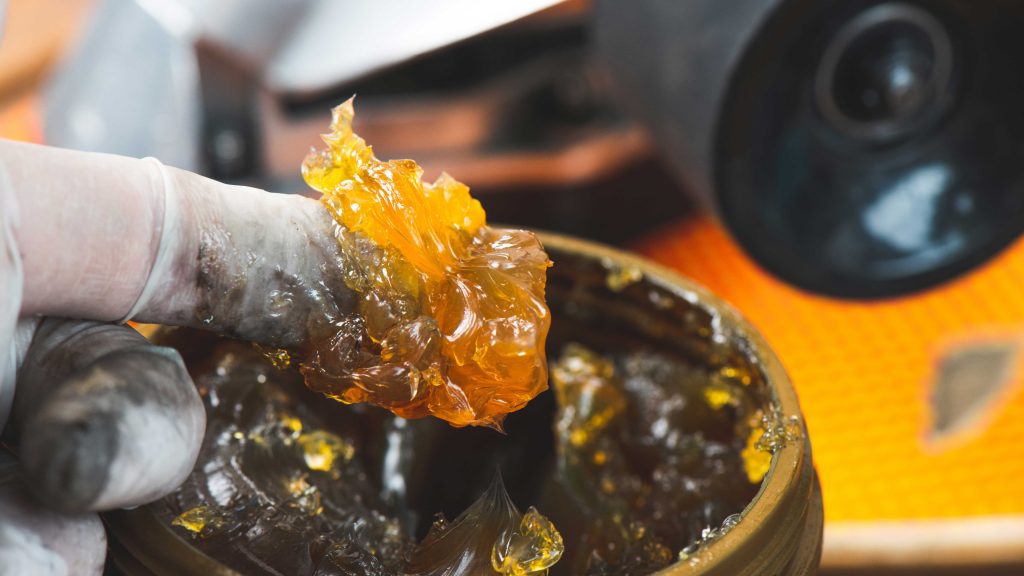
Grease is a petroleum derivative with high viscosity. The American Society for Testing and Materials (ASTM) defines grease as follows:
A semi-solid or solid product resulting from the dispersion of a thickening agent in a liquid lubricant, often petroleum oil, produced for a specific type of lubrication.
History of Grease
The word “grease” comes from the Latin root “crassus,” meaning fat. However, today we refer to grease as a lubricant derived from blending a thickener into base oils—whether mineral, synthetic, or bio-based.
The first greases produced were calcium-based and made without applying heat—referred to as “cold-mixed.” Soap was made from a combination of fat, resin oil, a fatty acid, and an alkali (like lime). Mixing these in mineral oil with a bit of water allowed the soap to disperse in the oil and formed the earliest greases, which had relatively satisfactory consistency.
Initially, mixing was done manually until machines were later introduced. Although early greases were not considered high-quality lubricants by today’s standards, they were adequate for low-speed vehicles in the 1800s–1900s. Over time, they became known primarily as “axle lubricants.”
Evolution of Grease Manufacturing
Early greases retained the water used in the reaction, which led to the grease losing consistency when exposed to heat or high speed due to water evaporation.
With industrial development—including electric devices and locomotives—greases needed to perform under higher speeds and temperatures. Thus, calcium-based greases made with heat and animal fats replaced cold-mixed types. These greases were softer, more effective, and water-resistant. However, because they still contained some water (1–2%), they were only suitable for temperatures near the water’s evaporation point (about 60°C).
Over time, greases have continued to evolve into the modern lubricants we know today.
Components of Grease
As per ASTM’s definition, grease consists of three main components:
Oil (base oil)
Thickener
Additives
The base oil and additives are the most significant parts of the formulation and heavily influence grease quality and performance. The thickener—often compared to a sponge—holds the oil and additives in place.
1-Base Oil
Most greases use mineral oil, derived from petroleum. These greases perform well across many industrial applications and offer good stability at both high and low temperatures.
2-Thickener
Thickeners combine with base oil to give grease its semi-solid structure. Most are metallic soaps, including lithium, aluminum, clay, polyurea, sodium, and calcium.
Recently, complex thickeners have become popular for their higher temperature tolerance and load resistance. The most common is lithium complex grease, which combines lithium soap with a low-molecular organic acid.
Non-soap thickeners, such as bentonite and silica, are used in high-temperature applications because they don’t melt. However, a common misconception is that high-temperature-resistant thickeners mean the entire grease is heat-resistant. In reality, the base oil still oxidizes quickly at high temperatures, so prolonged exposure is harmful.
3- Additives
Additives enhance beneficial properties, reduce undesirable ones, and introduce new advantages. Common additives include:
Oxidation inhibitors
Rust preventatives
Friction modifiers
Grease Viscosity Index
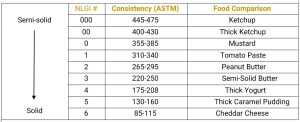
Greases are categorized by viscosity (or stiffness), from the softest to the thickest. The chart below compares the ASTM NLGI grade of grease to common food textures:
Most Important Fact About Grease
Grease must remain in place under load and during operation (e.g., inside a bearing or sliding surface). It must maintain its properties under varying loads, conditions, and operating temperatures.
Industrial Applications of Grease
Grease offers properties not found in industrial oils (e.g., gear oil, motor oil, brake fluid). Key uses include:
• Machines used intermittently or stored for long periods—grease stays on surfaces and offers long-term protection.
• Inaccessible machinery—high-quality greases can lubricate hard-to-reach parts without frequent reapplication.
• Severe operating conditions—for machines under high temperatures, pressures, or shock loads, grease is ideal.
Advantages of Grease Lubrication
• High retention—stays where applied.
• Convenience—less frequent lubrication needed.
• Sealing—helps seal components.
• Ease of use—simple to apply.
Disadvantages of Grease Lubrication
• Poor cooling capability
• Cannot penetrate small parts as effectively as oils
Types of Grease
Greases are named based on their soap base, each suited for specific applications. Important characteristics include:
• Color
• Dropping point
• Maximum operational temperatures
• Minimum operational temperatures
• Lifespan
• Pumpability
• Mechanical stability
• Washout resistance
Calcium Grease
One of the first types used. Cold-processed greases are now outdated. Modern calcium complex greases are common for their affordability and water resistance.
Sodium Grease
Came after calcium grease. Offers good lubrication at a low price, but lacks water resistance.
Lithium Grease
Invented during WWII, lithium grease was revolutionary. It is multi-purpose, water-resistant, and suitable across a wide temperature range.
Aluminum Grease
High-performance and more expensive, especially good for high-temperature environments.
Polyurea Grease
Unlike other types, polyurea grease has a non-metallic soap base, offering special properties and multi-purpose use.
Final Note on Lubrication
Bearings, bushings, etc., can be lubricated using oil or grease, depending on the conditions. However, grease is usually preferred. The key is choosing the correct type of grease (lithium, sodium, etc.). Wrong selection can shorten equipment life and lead to high costs.